How Clothing Actually Gets Made (and Why So Many Designers Get Stuck)
After 25+ years working in fashion, there is one conversation I keep having with designers, brand owners, and people seriously thinking about starting a label.
It isn’t about creativity.
It isn’t about trends.
It is about how to actually get their product made!
I hear the same questions again and again:
Where do I start?
Should I produce locally or offshore?
How do I know if a patternmaker, maker, or trim supplier is the right fit?
How do I make sure the quality matches my brand?
How do I get what I asked for, in the timeframe I need?
I meet incredibly talented people with strong ideas, clear aesthetics and motivated customers, and they are stuck!
They don’t know who to approach first!
They’ve been quoted minimums they cannot afford!
They’ve had sampling experiences go wrong!
Or they simply feel like there is information everyone else has except them & they don’t know where to get access to it!
And here is the truth:
Most independent brands do not struggle because they lack ability.
They struggle because the fashion supply chain is almost impossible to see from the outside.
Even I struggled - and I was already in the industry
Before I started Harlow, I had more than 15 years’ experience in product development, working with both local and offshore production.
But my background was in wholesale, not retail, mostly within department store and larger brand environments. Production quantities were typically 500 to 3,000 units per style. The factories, fabric mills and suppliers I worked with were structured for volume manufacturing.
Small batch brands operate in a completely different ecosystem.
When I launched Harlow, I found myself facing many of the same questions I now hear from new designers. I had to relearn the industry from a new perspective, and the learning curve was steep.
My biggest learning, and the real shift, wasn’t simply finding suppliers - It was building an external team.
A patternmaker, a technician, a sample machinist, a cutter, a maker and a fabric supplier, not as transactions, but as collaborators. Real progress came from conversations, listening, and working through ideas together.
Small brands don’t succeed because they locate a factory. They succeed because they learn how to work with the people who bring the product to life.
A space like the one we are creating now would have made an enormous difference. It would have given me direction much earlier and helped me feel far less lost.
Why this forum was created
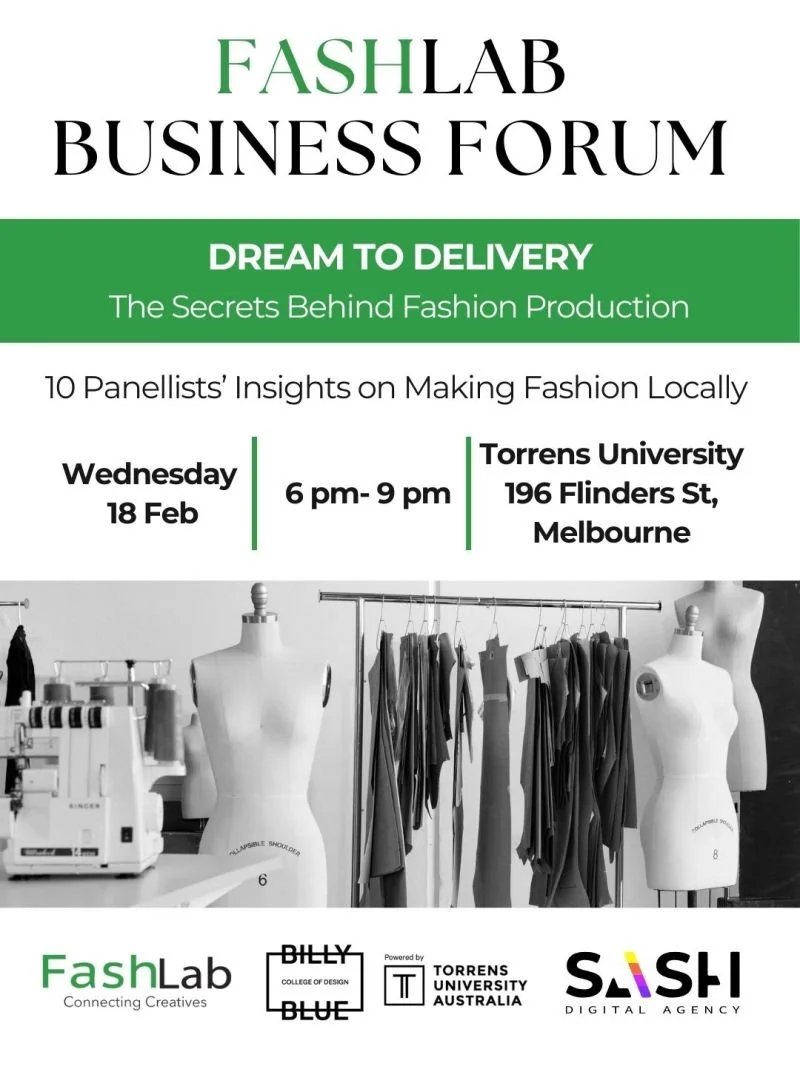
Because of this, FashLab is hosting a Business Forum as part of the PayPal Melbourne Fashion Festival Independent Program, that I will be hosting t
The purpose is simple:
We want to gently open the black box of local production.
This is not another surface-level panel - This is a practical, “how things actually work” conversation about making clothing, properly, sustainably, and in quantities that make sense for independent businesses.
Following the real life of a garment
The panel has been intentionally structured to follow the real pathway a garment takes.
From entering the industry and early brand development, through materials and trims, into patternmaking, sampling, production management and finally manufacturing infrastructure.
You will hear directly from people who do this work every single day:
Matthew Bull - the next generation navigating retail and brand building
Christopher Hrysanidis - building a made-to-order designer label
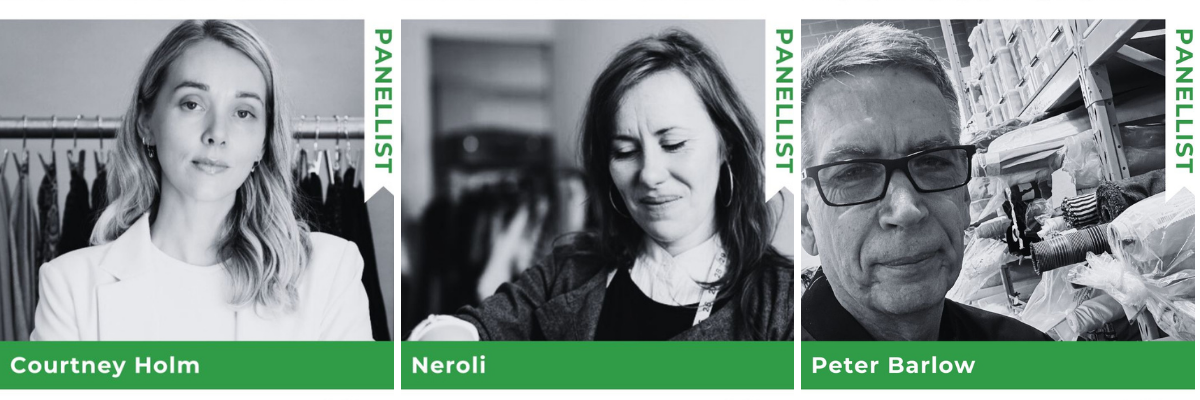
Courtney Holm (Circular Sourcing) - responsible textile sourcing and material systems
Lea Oldjohn (Corde Couture / Jack Stock Trims) slow craftsmanship and intentional making
Scott Bowring & Glen Rollason - patternmaking and development
Neroli Betts - sample machinist and micro-production specialist
Michelle Lee Drury - garment technician and production standards
Peter Barlow (Omada Collective) - local manufacturing and integrated production
Moderated by Julie Goodwin and Glen Rollason (RBPatterns), two deeply experienced and generous industry professionals who have worked through enormous industry change and adapted alongside it.
This panel will not cover PR, marketing or runway presentation.
This session is about the operational side of fashion - the part that determines whether a label survives.
Why this matters
Whether you are a startup, emerging brand or established business, you eventually reach the same point:
You need relationships.
You need systems.
You need trusted knowledge.
The goal of this forum is to openly share years of industry experience, to replace gatekeeping with guidance, and competition with community.
You’ll gain practical insight into how Melbourne’s fashion supply chain actually functions, and be able to ask questions directly to the people who can genuinely help you. It is also a rare opportunity to build real connections with peers, collaborators and experienced professionals in an intimate setting.
The forum is intentionally small (70 seats) so questions can be heard and conversations can actually happen.
Event details
FashLab Business Forum as part of PayPal Melbourne Fashion Festival Independent Program
📅 Wednesday 18 February 2026
🕕 6:00–9:00pm
📍 Torrens University, 196 Flinders St, Melbourne
If you have ever felt unsure how to take your brand from idea to product, you are very welcome in this room.
I would genuinely love to see you there
Kerry xXx